The rotator cuff is a group of 4 muscles that attach to the top of the humerus bone found in the upper arm. They provide stability to the shoulder and help keep the shoulder in its socket as it moves through its large range of motion. They can be thought of as the fine tuning control to shoulder movement, while the muscles like the pectoralis major, deltoids, and latissimus dorsi are the big movers. The rotator cuff is often injured through overuse, sports, falls, or shoulder dislocations.
Injury Mechanism
Often occur from two main causes
- Trauma-this is common in younger athletic populations where there is direct impact onto the shoulder from a fall or dislocation
- Repetitive use-typically occurs in older populations where the rotator cuff tendon has degenerated over time.
Injuries
- Rotator cuff tears: most commonly a partial tear will occur but full thickness tears can occur although often are more frequent in older populations
- Rotator cuff tendinopathy: using your tendon more than it can recover can lead to inflammation, pain and remodeling of the tendon making it weaker
- Impingement: current research shows this is less common than once thought, but it can be a cause of pain if the rotator cuff tendon is inflamed
- Labral tear: the labrum is made up of cartilage and acts to deepen the groove of the shoulder, helping to keep the shoulder in the socket. It can be injured in conjunction with the rotator cuff
Risk Factors
- Shoulder Positioning-over time having the shoulder sit anteriorly in the joint capsule can put strain onto the rotator cuff tendon. A mix of weakness and tight muscles can cause this
- Overhead activities: more likely to lead to overuse over time
- Age: tendons weaken with age and inactivity
- Large increases in training volume: gradually increases your activity is key to prevention
Symptoms
- Pain with movement: Painful shoulder movements, specifically rotating your arm out or in and raising it above your head are common symptoms
- Weakness of the shoulder: difficulty holding your arm up at eye level and out to the side are common
- Functional deficits: Difficulty with everyday tasks like reaching for the top shelf or putting on a jacket or a shirt
Physiotherapy
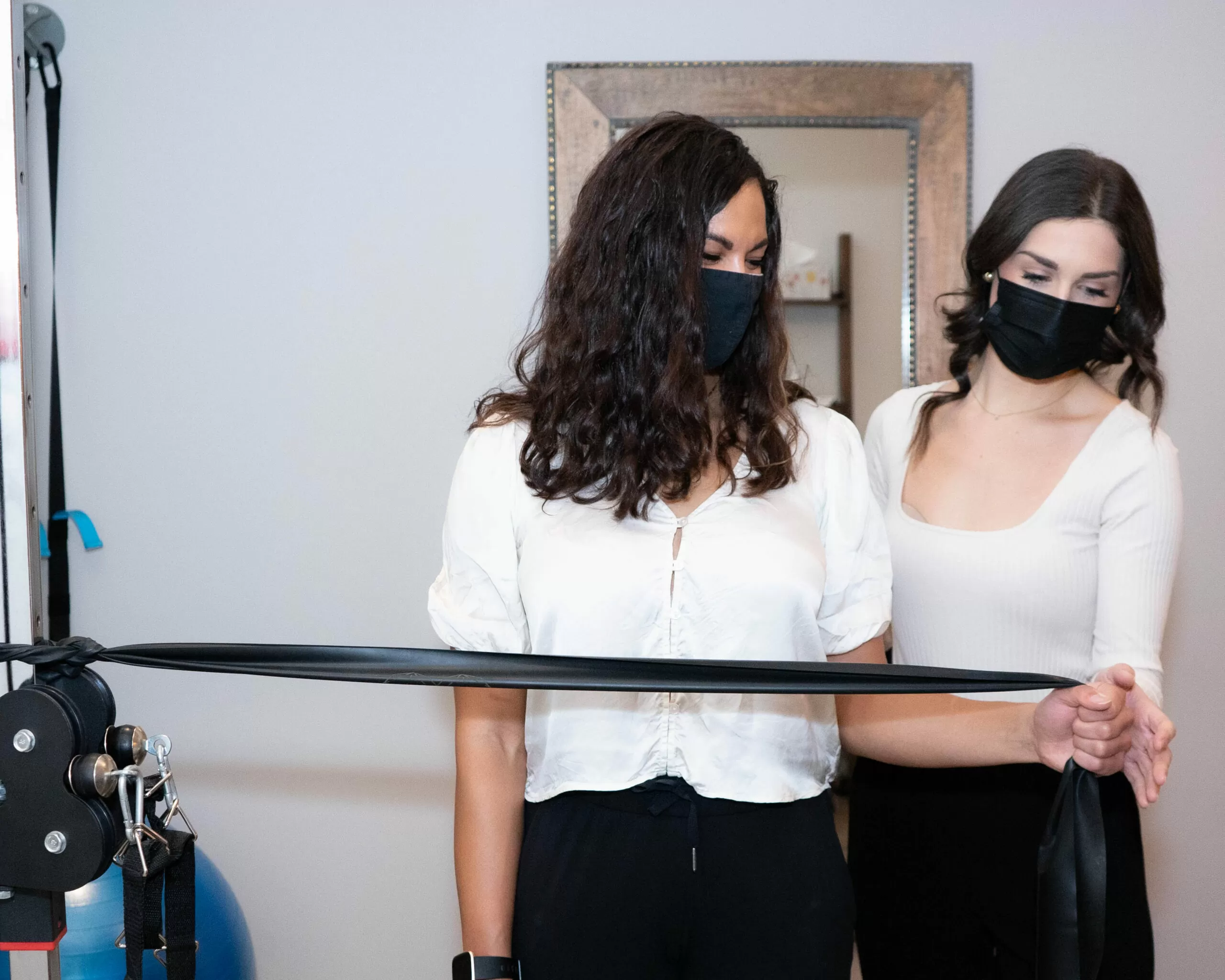
- Physiotherapy can help select the exercises that will target the specific weakness you have in your shoulder movements
- A detailed Physiotherapy assessment can pick out which activities may be modified while you heal
- Physiotherapy can help reduce any overworking or tense muscles that may be making your rotator cuff work harder than it should
- Non surgical care like physiotherapy shows more promise each year as research demonstrates surgery is not always needed for rotator cuff tears
Food for Thought
- Current research shows that many people have tears in their rotator cuff that remain asymptomatic.
- Imaging of the shoulder like ultrasound and MRI do not accurately predict pain even when injury to the rotator cuff is present
- Strength, endurance and stability of the shoulder through graded exercise is a larger predictor of long term return to function after a rotator cuff injury
References
https://www.physio-pedia.com/Rotator_Cuff
Mihata T, Morikura R, Hasegawa A, et al. Partial-Thickness Rotator Cuff Tear by Itself Does Not Cause Shoulder Pain or Muscle Weakness in Baseball Players. The American Journal of Sports Medicine. 2019;47(14):3476-3482.
Boorman RS, More KD, Hollinshead RM, Wiley JP, Mohtadi NG, Lo IKY, Brett KR. What happens to patients when we do not repair their cuff tears? Five-year rotator cuff quality-of-life index outcomes following nonoperative treatment of patients with full-thickness rotator cuff tears. J Shoulder Elbow Surg. 2018 Mar;27(3):444-448.
Sources:
By: Elias Pexioto