
The Benefits of exercise are numerous, from improving your quality of life, decreasing pain levels, and decreasing the risk of all cause illness or death. Despite this, many people have a tough time beginning and maintaining a regular exercise routine! The skill of starting a new behavior or changing an old one is something that can be built, but first it’s important to know where to start.
What works for getting started?
Multiple frameworks exist that explore what needs to be present for someone to start and stick with a new routine or behavior change. Through study on people’s behaviors and combining frameworks these factors appears most important along with social support from friends and family:
- The believe that exercise is important for yourself- improves how your prioritize exercise
- Viewing your ability to do the exercise as adequate – essentially your confidence
- They trust the source of their exercise advice- It is critical to have a knowledgeable professional guide exercise at times
- They have enough internal motivation- goes hand in hand with number 1
Common mistakes to avoid
- Starting too aggressively and then quitting
It is always best to scale your exercise routine up over time
- Being too rigid
Allowing your exercise routine to have slight variation based on how your body is feeling is critical to long term adherence
- Changing your routine too often
This can create difficulty in your ability to build the habit of exercise and your bodies ability to adapt to the exercise
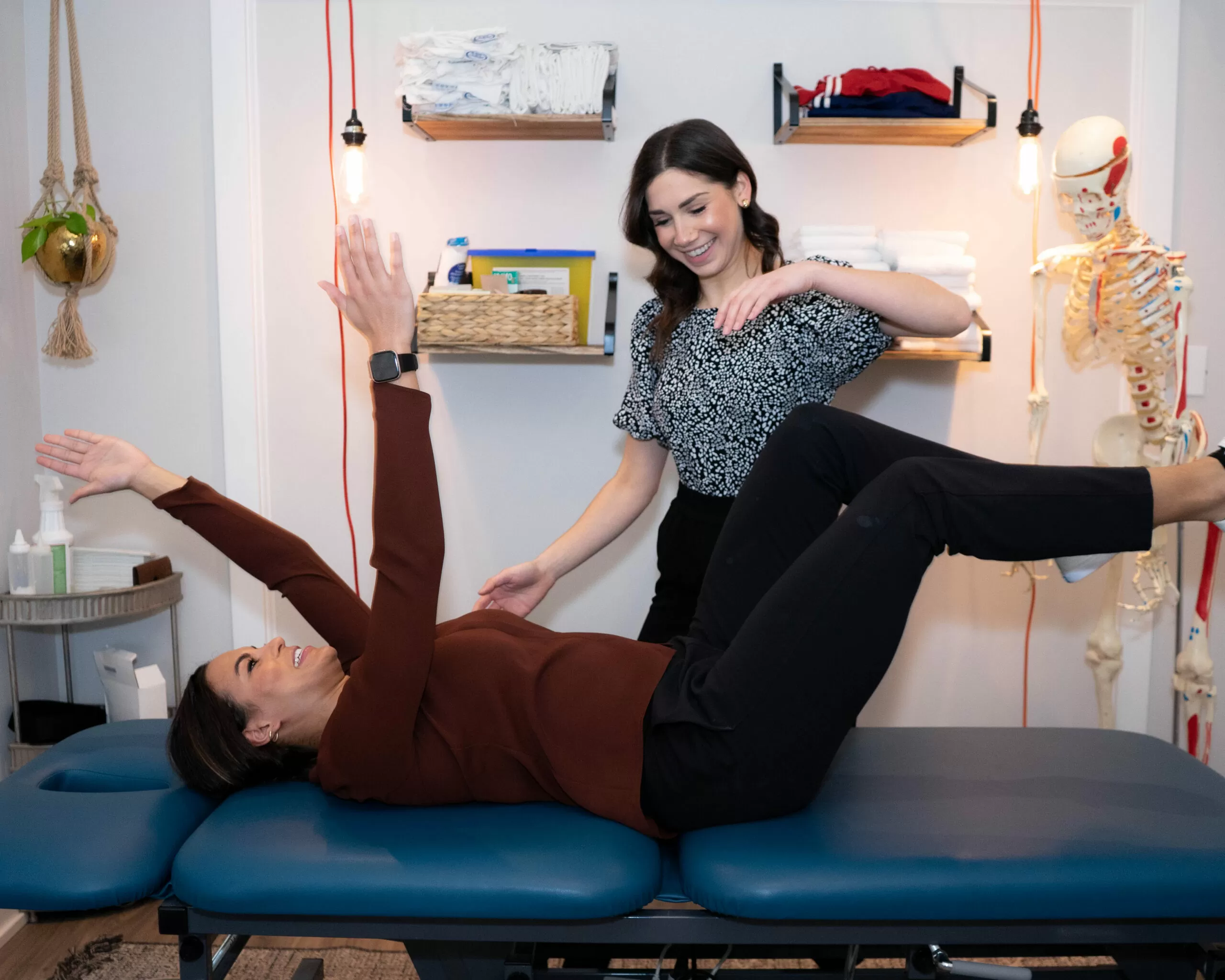
How Physiotherapy can help
- Identify which movements, how much , and how often are right for you
- Teach your the fundamentals of exercise in a safe and controlled way
- Educate you around why different types of exercise are important
- Help you identify the reasons that motivate your to exercise and create a joint plan to follow with regular check ins
If you are struggling to perform duties in your daily life, have pain or need your exercise strategy assessed, book in with one of our Physiotherapist’s at For Health’s Sake to get started!
References
Ryan E. Rhodes, Desmond McEwan, Amanda L. Rebar,
Theories of physical activity behaviour change: A history and synthesis of approaches,Psychology of Sport and Exercise, Volume 42, 2019, Pages 100-109,
ISSN 1469-0292 (https://www.sciencedirect.com/science/article/pii/S1469029218305168)
Verhagen E, Engbers L. The physical therapist’s role in physical activity promotion. Br J Sports Med. 2009 Feb;43(2):99-101. doi: 10.1136/bjsm.2008.053801. Epub 2008 Oct 6. PMID: 18838405.
By: Elias Peixoto, Physiotherapy Resident