

INTRODUCTION TO BOUNDARIES – Part Two
BOUNDARY RECAP
In the first part of our discussion on boundaries, we introduced the topic and explored what boundaries are, identified the 7 types of boundaries, and discussed some key benefits of having boundaries. We discussed the fact that boundaries are necessary for us to have healthy relationships; to clarify expectations for others and ourselves; and help support our mental, emotional, physical, and spiritual health.
As we reflect on the holidays that have passed, there were likely many opportunities to create and assert boundaries as many gathered with others; became busy with year-end work and personal tasks; and set goals and intentions for 2023. Since boundaries are such an important and substantial topic, look out for additional coverage on boundaries in future FHS newsletters. We will definitely be touching on them again since they’re so critical. For now however, let’s continue with the second part of our introduction where we’ll explore signs you may need healthier boundaries, how to set and maintain boundaries, and identify what healthy boundaries actually look like.

SIGNS YOU NEED HEALTHIER BOUNDARIES
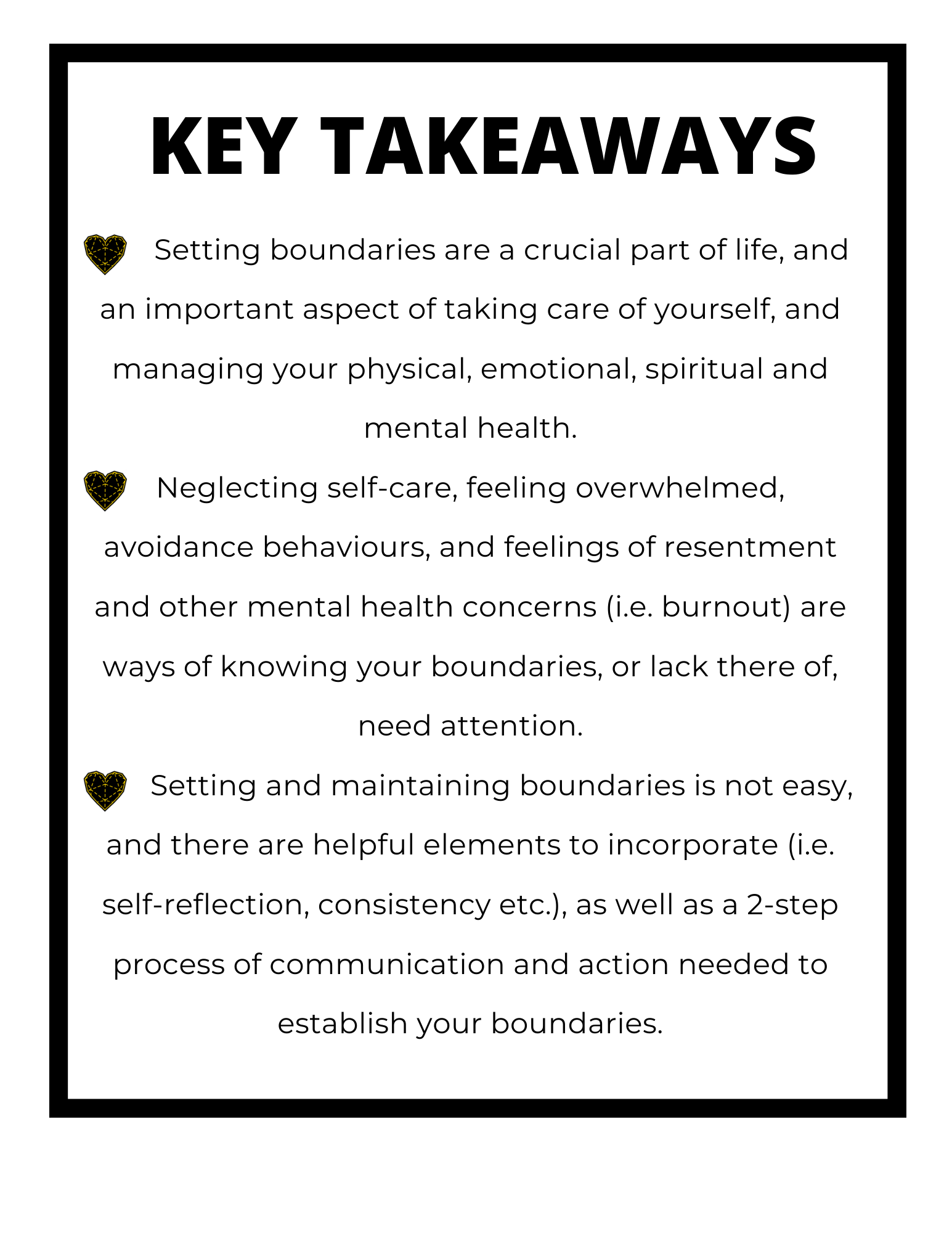
Boundaries are expectations and needs that help you feel safe and comfortable within your relationships, and clear expectations within relationships help us stay mentally and emotionally well (Tawwab (2021). Some of the signs that indicate you may have challenges with boundaries include, neglected self-care, feeling overwhelmed, avoidance, resenting others, and other mental health issues. Let’s have a look at each more closely:
Neglected Self Care – A lack of self-care is one of the first signs there are boundary issues. Not being able to eat a proper meal, or take 30 minutes to exercise are examples. Self-care at its root is the boundary you create for others, to take care of yourself.
Boundaries in this context mean saying no to helping others in order to say yes to your own emotional, mental, physical well being.
Overwhelm – Feeling overwhelmed denotes having more to do than time will allow. For many it is a sense of being overpowered by a feeling, or thought about not being able to manage aspects of life.
Understanding and creating boundaries is an assertive way to gauge what is feasible or manageable, giving you the opportunity to reasonably channel your efforts and energy.
Avoidance – Ignoring, disappearing, cutting people off, not responding to a request, failing to show up, or procrastinating on setting the record straight, are all avoidance behaviours. Avoidance is a fear based, passive-aggressive way of expressing that you’re tired of showing up, and hoping the problem will go away.
Boundaries allow you to be assertive about your limitations and expectations ahead of time by expressing them outright.
Resentment – Feeling taken advantage of, irritated, annoyed, frustrated, and bitter is the outcome of the resentment felt if we don’t set limits. When we continue to say yes to things that would be better addressed with a no, you may start to feel angry. However, the truth is you’ve played a pertinent role in the imbalanced equation, and change is needed on your part to produce a different outcome.
Boundaries help prevent brewing conflict, and feelings of resentment by helping us do things from a place of joy and genuine desire, and not obligation or feeling forced.
(Scott, 2021; Tawwab, 2021)
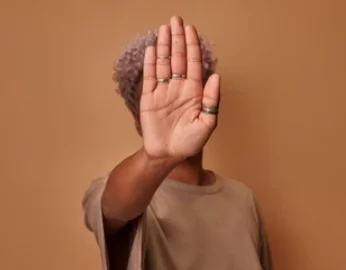
HOW TO SET AND MAINTAIN GOOD BOUNDARIES
We’ve discussed the need for boundaries, and their value in our lives. Establishing and maintaining boundaries takes a lot of work, discipline, and desire – they aren’t easy. Many are fearful about potential responses and outcomes, and let’s face it; there may be disputes, battles, and losses. We’ll discuss these in the future! However, short-term discomfort for long-term healthy relationships that will contribute to your well being is worth it! So let’s take a look at how we start setting boundaries.
Starting tips:
- Enjoy some self-reflection – Why is each potential boundary important to you, and how do they benefit your emotional well being? Why do you feel uncomfortable? What’s happening to you? Take some time to understand yourself and what’s actually going on.
- Start small – Build boundaries slowly and pace yourself; allowing time to evaluate if they are heading in the right direction or need fine-tuning.
- Set them early – Although certainly not impossible, it can be challenging to start boundaries in a pre-existing relationship. Setting them from the beginning or intervening and setting them up in an existing relationship helps eliminate hurt, frustration, and confusion. When you notice they’re needed, don’t avoid – try to get started as soon as possible.
- Be consistent – Do not let your boundaries slide – keep them consistent and steady. This helps reinforce your original threshold and ensures those lines remain clear. Letting boundaries slip leads to confusion and blurred expectations.
- Be your biggest fan – For boundaries to have a strong foundation, you must show yourself some love, knowing you are valuable and deserve to have boundaries that protect your peace and well being. If you need help adopting a positive self-narrative you can try 1) engaging in healthy mood-boosting activities often, 2) spending time with a positive and trusted friend, or 3) exploring this area more through psychotherapy or other health and wellness practices.
(Pattemore, 2021)

The Boundary-Setting Process:
Once you’ve identified a boundary that you’d like to set, there are two parts to the process: communication and action (Tawwab, 2021).
Communication – Verbally communicating your needs is the first step. People can’t accurately assume your boundaries. Explicitly state your expectations so there is little room for others to misinterpret what works for you. Assertive verbal statements like the following example are the most effective, “It’s important that you honour plans that we make. If you have to make a change, please send me a text a few hours before.”
Action – Here you must maintain what you communicate, through your behaviour. Once you’ve communicated your boundary, if it’s violated, you need to reinforce with action. This is the only way most people will understand that you’re serious, which will help them get serious with your boundaries as well. For example, if we use the violation of our above boundary as an example, you would follow with action by: letting your friend know that you can’t accommodate a change of plans because they didn’t provide enough notice, and reschedule for another time.
SO…. WHAT DO HEALTHY BOUNDARIES LOOK LIKE?
- Being clear about your values, needs, and expectations and sharing these with others appropriately
- Having a healthy openness with people who have earned your trust
- Listening to your own opinion and inner wisdom
- Being comfortable saying no and managing emotions such as guilt if they arise
- Being comfortable hearing no without taking offense – respect the boundaries of others
- Reconsidering relationships if your boundaries are continuously violated
Author: Yolanda C. Kosic, MSW, RSW
References
Cloud, H., & Townsend, J. S. (1992). Boundaries: when to say yes, when to say no to take control of your life . Zondervan Pub. House.
Merriam-Webster. (n.d.) Overwhelm. In Merriam-Webster.com dictionary. Retrieved December 17, 2022, from https://www.merriam-webster.com/dictionary/overwhelm
Pattemore, C. (2021, June 21). 10 Ways to Build and Preserve Better Boundaries. PsychCentral. Retrieved from https://psychcentral.com/lib/10-way-to-build-and- preserve-better-boundaries
Scott, E. (2021, Jan 12). Setting Boundaries for Stress Management. Verywell Mind. Retrieved from https://www.verywellmind.com/setting-boundaries-for-stress- management-3144985
Tawwab, N. G. (2021). Set boundaries, find peace: a guide to reclaiming yourself. Tarcher Perigee, an imprint of Penguin Random House LLC.
The contents of the For Mental Health’s Sake newsletters, such as text, graphics, images, and other material therein are for informational purposes only. The Content is not intended to be a substitute for professional medical advice, diagnosis, or treatment. Always seek the advice of your physician or other qualified health provider with any questions you may have regarding a medical condition. Never disregard professional medical advice or delay in seeking it because of something you have read in a For Mental Health’s Sake newsletter.